
Two-way radios are business-critical infrastructure. When they fail without warning, the consequences can range from operational disruption to safety incidents. A two-way radio maintenance contract gives your organisation priority support, predictable costs, and the assurance that qualified engineers are on hand when you need them.
This article explains what a two-way radio maintenance contract typically covers, how support tiers work, and what to consider when choosing a level of cover.
Why Planned Maintenance Matters for Radio Systems
Radio equipment degrades gradually. Batteries lose capacity, repeaters accumulate faults, and firmware drifts out of date. None of these issues announces itself clearly until the system fails during a shift, an event, or an incident.
The risks of unmanaged radio systems fall into three categories:
- Safety: communication failures in events, facilities, and security environments can leave teams unreachable during incidents. For lone workers, that gap in communication creates direct HSE exposure.
- Operational: downtime disrupts coordination across sites, floors, and teams. Replacing a faulty handset or repeater takes time, and sourcing parts without an agreement in place can add days to the process.
- Financial: reactive repairs and emergency call-outs cost more than planned maintenance. A fixed-price contract protects your budget and removes unpredictable spend.
What a Two-Way Radio Maintenance Contract Typically Covers
Contracts vary by provider and tier, but most structured agreements are built around a core set of services. Understanding what each one does helps you assess what level of cover your operation actually needs.
Telephone Support and Service Desk
A manned service desk handles fault reports during office hours. Many issues, including configuration errors, software faults, and user problems, can be diagnosed and resolved over the phone without an engineer attending site.
Field Service Support
When a fault cannot be resolved remotely, a manufacturer-trained engineer attends site within an agreed response time. Field engineers carry diagnostic equipment and common replacement parts, so most faults are resolved in a single visit.
Managed Repair
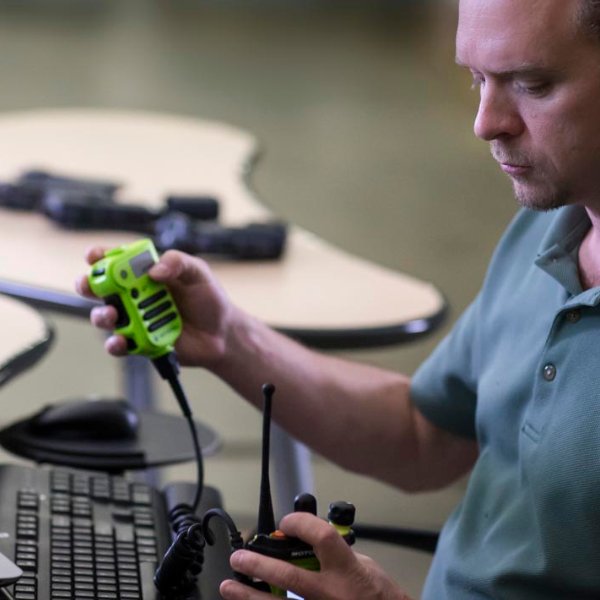
If a radio needs to be removed from site for repair, a managed repair process covers the logistics. The provider takes responsibility for the repair (whether in-house or via the manufacturer), updates you throughout, and manages the return of the equipment after testing.
Preventative Maintenance Inspections (PMI)
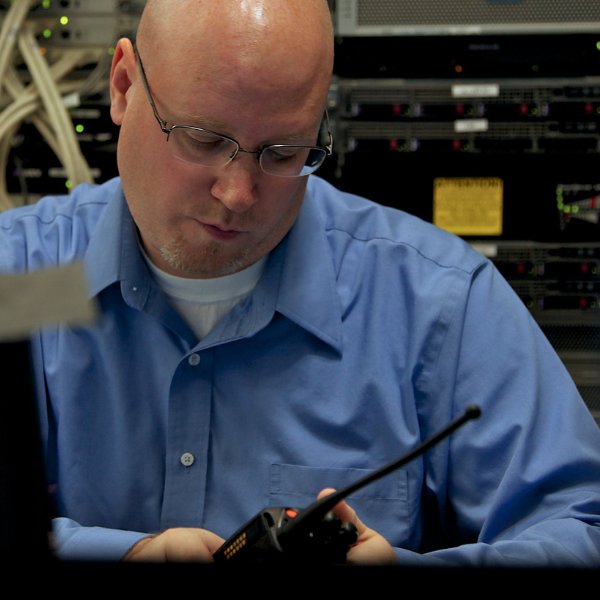
A PMI is a scheduled visit where an engineer inspects the system, checks performance, identifies developing issues, and produces a documented report with recommended actions. PMIs are the clearest expression of proactive maintenance: a fault caught during a planned inspection is far cheaper to fix than one discovered during an operational failure. For critical operations, PMIs can be scheduled more than once per year.
Remote Monitoring and Fix
For IP-connected systems, infrastructure can be monitored remotely. Faults are diagnosed without requiring an engineer on site, reducing response times and minimising disruption. This is particularly valuable for multi-site operations where a call-out for every minor issue would be impractical.
System Health Check
A health check is a one-off assessment of a radio system’s current condition. It produces a report covering performance, known issues, and recommendations. It can be used as a standalone diagnostic, or as a starting point before moving to a maintenance contract.
Understanding Maintenance Contract Tiers
Most providers structure their contracts across a number of tiers. The table below is how 2CL structures its maintenance contracts across three tiers. Exact naming and scope varies by provider, so always confirm what is included.
|
Feature |
Bronze |
Silver |
Gold |
|
Telephone support |
✓ |
✓ |
✓ |
|
Site attendance |
✓ |
✓ |
✓ |
|
Managed repair |
✓ |
✓ |
✓ |
|
Annual PMI |
|
✓ |
✓ |
|
System infrastructure cover |
|
✓ |
✓ |
|
Desktop radio cover |
|
✓ |
✓ |
|
Spares facility |
Optional |
Optional |
Optional |
|
24/7/365 support |
|
|
✓ |
|
Portable handset cover |
|
|
✓ |
|
Physical damage cover |
|
|
Optional |
|
Radio charging unit cover |
|
|
Optional |
Entry-level cover
An entry-level contract provides a manned service desk during office hours, site attendance when remote resolution is not possible, and a managed repair process with updates. This is appropriate for organisations that want a clear, prioritised route to support and a structured repair process, without committing to higher-tier costs.
Mid-tier cover
Mid-tier contracts add preventative maintenance inspections, system infrastructure cover, and fixed desk radio cover. An optional spares facility is often available at this level, meaning a replacement unit is held and can be dispatched immediately if something needs to leave site. This tier suits operations that rely on their radio system daily and benefit from proactive inspection rather than purely reactive response.
Comprehensive cover
The highest tier adds 24/7/365 out-of-hours engineer standby and portable handset cover. An engineer can attend site at any hour within the contracted Service Level Agreement (SLA). Optional extras typically include physical damage cover and charging unit cover. This level is appropriate for operations where a radio failure at any time is unacceptable, including venues, events, and security-critical facilities.
Additional Services Worth Considering
The following services are commonly available as add-ons to a maintenance contract, or as standalone arrangements:
- Ofcom Licence Management
A provider manages your radio licence renewals and obligations on your behalf, ensuring you remain authorised to operate without having to track it internally. This is particularly useful for large or multi-channel fleets. - Loan Equipment
Replacement units provided during repair periods to maintain operational continuity. Not all contracts include this as standard, so it is worth confirming. - Battery Replacement Programmes
Scheduled replacement of radio batteries and UPS units on a planned cycle. Battery degradation is one of the most common causes of gradual performance decline and is frequently overlooked until a handset stops lasting a shift. - Flexible SLA Options
Response time commitments typically span office hours, extended hours, or 24/7/365 cover. The right SLA depends on when your operation runs and what the consequence of a radio failure would be during out-of-hours periods.
How to Choose the Right Level of Cover
The appropriate contract tier depends on three questions:
1. how critical is your radio system to daily operations
2. what are the consequences of an unplanned failure, and
3. what hours does your operation run?
For organisations where the radio system supports safety-critical communication, including lone worker protection, security operations, and large-scale events, the highest tier is often the starting point rather than a premium. For smaller operations with daytime-only usage, an entry-level contract with a clear repair process may be sufficient.
It is also worth considering infrastructure separately from handsets. A repeater failure affects every user on the system simultaneously. Infrastructure cover is typically available from mid-tier contracts upwards, but it is worth confirming whether your contract includes it explicitly.
Frequently Asked Questions
What is a two-way radio maintenance contract?
A maintenance contract is a service agreement between an organisation and a radio specialist that covers ongoing support for a radio system. It typically includes a service desk, field engineer attendance, managed repairs, and, at higher tiers, preventative inspections and 24/7 response. The contract defines response times, what equipment is covered, and how faults are handled.
How much does a two-way radio maintenance contract cost?
Pricing depends on the size of the fleet, the mix of equipment (handsets, infrastructure, charging units), the SLA level required, and whether extras such as loan equipment or physical damage cover are included. Most providers offer tiered contracts with fixed annual pricing, rather than charging per call-out. Requesting a tailored quote based on your specific fleet is the most accurate approach.
What is a Preventative Maintenance Inspection (PMI) for two-way radios?
A PMI is a scheduled visit from a qualified engineer who inspects the radio system, tests performance, checks for developing faults, and produces a written report with findings and recommendations. PMIs are designed to catch issues before they become failures. They are typically included from mid-tier contracts upwards and can be scheduled once or multiple times per year.
Can I get my radios repaired without a maintenance contract?
Yes. Most radio specialists accept ad hoc repairs on a chargeable basis. However, contract customers typically receive priority handling, faster turnaround times, and loan equipment during the repair period. Ad hoc repairs also carry no SLA commitment, so response times can vary significantly depending on workload.
What does 24/7 radio support actually mean?
On a comprehensive maintenance contract, out-of-hours standby engineers are on call every day of the year, including bank holidays. If a fault cannot be resolved remotely, an engineer will travel to site within the contracted SLA regardless of the time. The specific response time is agreed as part of the contract and is contractually binding.
What is the difference between a maintenance contract and an extended warranty?
An extended warranty is typically a manufacturer-backed product that covers parts and labour for defined failure types, such as wear and tear or accidental damage, for a fixed term. A maintenance contract is a service relationship covering ongoing support, field engineers, PMIs, repair management, and SLA-backed response. Both can run alongside each other: the warranty addresses hardware repair costs; the maintenance contract addresses service response and system management.
Does a maintenance contract cover all types of radio equipment?
Scope depends on what the contract explicitly includes. Portable handsets, system infrastructure (repeaters and controllers), fixed desk radios, and charging units are often covered separately, and not all tiers include all categories. Check the contract schedule carefully to confirm which equipment is in scope, and whether infrastructure and chargers require separate cover.
What is an SLA and why does it matter for radio maintenance?
A Service Level Agreement (SLA) is a contractual commitment defining the maximum response and resolution times a provider will meet. For radio maintenance, this typically covers the time to respond to a fault report, the time to attend site if needed, and the turnaround time for repairs. SLAs provide certainty and accountability: if a provider misses an SLA commitment, the contract should define the remedies available.
Can a maintenance contract cover radios not originally bought from the same supplier?
Many radio specialists will support equipment they did not originally supply, provided it is a recognised brand and the model is within the scope of their engineers’ training. A system health check is often the starting point, establishing the current condition of the equipment before it is brought into a structured maintenance programme.
What is Ofcom licence management and should it be part of my contract?
All professional two-way radios operating on licensed frequencies in the UK require a valid Ofcom licence. Ofcom licence management means the radio specialist handles renewals, changes to channel assignments, and licence compliance on your behalf. It is particularly useful for organisations operating large or multi-site fleets where keeping track of multiple licences internally adds administrative burden.
Talk to 2CL About Your Radio Maintenance
If your organisation is reviewing its radio maintenance arrangements, 2CL can help. With over 50 years of experience and manufacturer-trained engineers, 2CL designs and manages maintenance programmes for organisations across the UK, from single-site operators to complex multi-venue estates.
2CL’s contracts are structured across Bronze, Silver, and Gold tiers, with standalone services available including system health checks, Ofcom licence management, loan equipment, and battery replacement programmes. As a Motorola Solutions Platinum Reseller, 2CL supports fleets across Motorola, Hytera, Caltta, and Icom.
Clients including British Land, ACC Liverpool, and Compass Minerals trust 2CL for long-term managed radio support.
To discuss your requirements and get a tailored quote contact us.