
Two-way radios are one of the most misunderstood pieces of workplace technology.
Despite being widely used across construction, events, facilities management, security, and healthcare, a surprising number of organisations still hold back based on assumptions that haven’t been accurate for years.
This article addresses the most common misconceptions and explains what modern professional radios can actually do.
Myth 1: Two-Way Radios Are Old Technology
The image many people have of two-way radios is a heavy, boxy device with a long antenna and crackly audio. That picture is very much out of date.
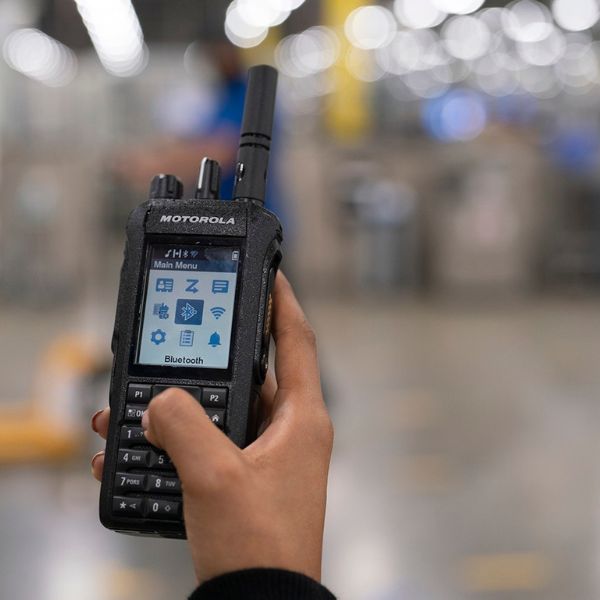
Today’s professional radios operate on Digital Mobile Radio (DMR) standards, the same digital framework used by emergency services across the UK. Modern handsets like the Motorola MOTOTRBO R7 weigh under 300 grams, offer Bluetooth connectivity, GPS tracking, integrated Wi-Fi, and noise-cancelling audio.
Entry-level models such as the Motorola R2 still provide digital clarity, long battery life, and IP55 dust and water resistance in a device lighter than most smartphones.
The question is no longer whether radios can do the job, but which configuration suits your environment.
Myth 2: Mobile Phones Are a Better Option
Smartphones are excellent personal communication devices. However, for coordinating a team of 50 people across a multi-site estate, a construction site, or a live event, they are genuinely not the right tool.
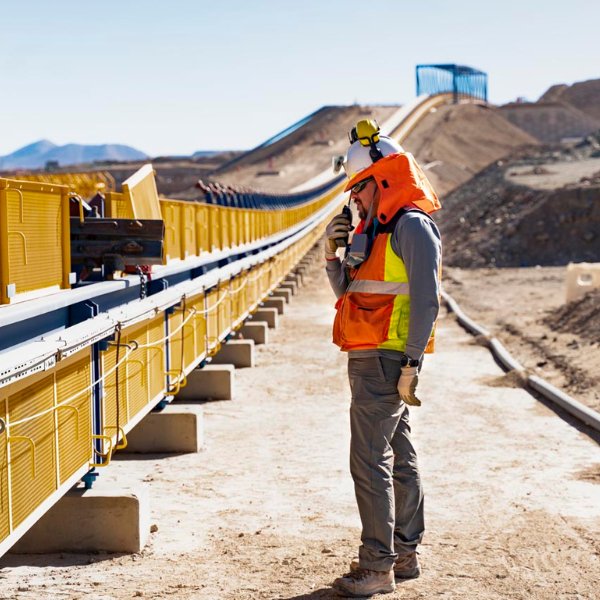
Two-way radios offer one-to-many communication with a single button press, with no call setup delay and no 4G/5G network dependency. When a mobile network is congested, such as at a major outdoor event, radio systems operate independently and remain reliable. Radios also work in areas with no mobile signal, including underground environments, server rooms, and metal-clad warehouses.
There are specific scenarios where smartphones and radios complement each other, and some modern radio systems can bridge the two. But for operational teams that need instant, dependable group communication, radios have a clear practical advantage.
- For a detailed comparison, see our article on two-way radios vs smartphones.
Myth 3: The Range Won’t Cover Our Site
Range is the question most organisations ask first. Factors including building materials, terrain, frequency band, and antenna type all influence real-world coverage.
Any coverage limitations are almost always solvable. Repeaters extend coverage by relaying signals around obstacles and across distances, and multiple repeaters can be IP-linked to provide wide-area coverage across a city or between sites in different parts of the country.
For temporary deployments such as events or construction projects where infrastructure isn’t in place, portable repeater solutions provide the same capability without permanent installation.
At Glastonbury Festival, 2CL deploys a system across 1,500 acres using 3,865 Motorola digital radios on 137 channels, supporting 75 separate user groups. Range, even at that scale, is not a barrier.
- Read more about the Glastonbury Festival deployment.
Myth 4: You Need a Licence and It’s Complicated
Most professional two-way radios require an Ofcom licence to operate in the UK, but the process is straightforward and the cost is modest.
A Simple UK licence, which covers use of handheld radios anywhere in the UK, costs £75 for five years. That works out at £15 per year for your organisation, not per radio.
The licence is issued by Ofcom, the UK’s communications regulator, and gives your organisation access to dedicated frequencies, reducing interference from other users. For organisations that need their own assigned frequencies, a Technically Assigned licence provides that, with costs depending on location and frequency requirements.
2CL manages the entire Ofcom licensing process on behalf of clients, including initial application, renewals, and any amendments as your system grows. If you would rather not deal with the paperwork, you don’t have to.
There is also a category of licence-free radios, typically operating on PMR446 frequencies, which require no licence at all. These are suitable for light-duty use in small areas, but they have limited range and power compared to licensed equivalents.
Myth 5: Two-Way Radios Only Do Voice
This was true of analogue radios a generation ago. It has not been true of professional digital radios for well over a decade.
Modern DMR radios support a wide range of additional capabilities alongside voice communication:
- GPS tracking and location monitoring, integrated with dispatch software such as TRBOnet
- Lone worker and man-down detection, which automatically triggers an alert if a worker is incapacitated or fails to respond within a set time. Read more about this feature.
- Text messaging and status updates, reducing unnecessary voice traffic on busy channels
- Emergency calls and transmit interrupt, giving designated users the ability to override all other communications in a critical situation
- Bluetooth audio for hands-free operation with compatible headsets
- Integration with CCTV, access control, and alarm systems, creating a single operational picture for security teams
At Southampton FC’s St Mary’s Stadium, 2CL deploys a fully integrated system where Motorola MOTOTRBO radios, Avigilon CCTV with AI analytics, body-worn cameras, and TRBOnet dispatch software all operate on a single platform. Voice is one part of a broader operational communications ecosystem.
- Read more about the integrated system at Mary’s Stadium.
Myth 6: Two-Way Radios Are Too Expensive
The cost comparison depends heavily on what you are comparing against.
Professional radios are available at a range of price points, from entry-level models suitable for retail and hospitality through to feature-rich handsets for complex operational environments.
Where upfront capital is a constraint, radio hire is a practical alternative. 2CL offers both short-term event hire and long-term hire arrangements, including full programming, Ofcom licence management, and on-site support.
For organisations that have invested in chargers and accessories for an older fleet, it is worth knowing that modern radios are designed with backward compatibility in mind. The Motorola R2, for example, is compatible with DP1400 chargers, meaning migration to a current model does not require replacing your entire infrastructure.

Frequently Asked Questions
Do I need an Ofcom licence to use two-way radios in the UK?
Most professional two-way radios require an Ofcom licence. The most common type for business use is a Simple UK Light licence, which costs £75 for five years and covers use of handheld radios anywhere in the UK. PMR446 licence-free radios are the exception: these can be used without a licence but have significantly lower power and range than licensed equivalents.
How far can a two-way radio transmit?
Real-world range depends on the environment, the frequency band, and whether any coverage infrastructure is in place. A handheld radio in open ground might reach several kilometres; the same radio inside a steel-framed building might cover only a few hundred metres. Repeaters and IP-linked infrastructure can extend coverage to cover entire sites, cities, or multiple locations across the country.
Are two-way radios better than mobile phones for teams?
For operational teams that need instant group communication, radios have practical advantages over mobile phones: no call setup delay, one-press group broadcast, no reliance on a mobile network, much longer battery life, and purpose-built durability. For certain use cases, particularly across large sites or at events, mobile networks become congested or unavailable at exactly the moments you need it.
What is DMR and why does it matter?
DMR stands for Digital Mobile Radio. It is the international standard for professional digital two-way radio communication, used by businesses, local authorities, and emergency services across the UK and Europe. DMR radios offer clearer audio than analogue, more efficient use of radio spectrum, and support for data features such as GPS, text messaging, and lone worker monitoring.
Can two-way radios integrate with other security systems?
Yes. Modern digital radio systems can be integrated with CCTV, access control, alarm management, and dispatch software platforms. This allows security teams to manage communications, monitor camera feeds, track staff locations, and respond to incidents from a single interface, rather than switching between separate systems.
What is the battery life of a professional two-way radio?
Battery life varies by model and usage pattern, but most professional handsets are designed for a full working shift. The Motorola R2, for example, offers up to 26.5 hours with a high-capacity battery. Charging options include single-unit desk chargers and multi-unit gang chargers that can replenish an entire fleet overnight.
Are two-way radios difficult to use?
Professional radios are designed for simplicity. The push-to-talk (PTT) button is the primary control, and most users can be trained in a few minutes. Programmable buttons allow common functions to be accessed quickly without navigating menus.
Can I hire two-way radios instead of buying them?
Yes. Radio hire is a practical option for events, short-term projects, seasonal peaks, or organisations that want to trial a system before committing to a full purchase. 2CL offers event hire and long-term hire, including programming, licensing, and on-site support where needed.
What happens if my radio system doesn’t cover the whole site?
Coverage gaps are almost always solvable with repeaters, which relay signals to extend range and work around physical obstacles. For large or complex sites, multiple repeaters can be linked to provide seamless coverage across buildings or between locations. 2CL carries out site surveys as part of the system design process to identify coverage requirements before deployment.
Are digital radios compatible with older analogue equipment?
Many modern digital radios, including the Motorola MOTOTRBO range, support both digital and analogue modes. This means organisations can migrate from analogue to digital incrementally, running both types on the same system during the transition, rather than replacing everything at once.
Talk to 2CL About Your Requirements
If you’re evaluating two-way radios for your organisation and want straightforward advice, our team can help.
With over 50 years of experience across sectors including facilities management, events, construction, security, and healthcare, 2CL designs and supports radio systems for organisations of every size. We handle everything from Ofcom licensing and system design through to installation, programming, and ongoing maintenance.
Radios are available to buy or hire. Get in touch to discuss what would work for your environment.