
Two-way radios are routinely paired with accessories that extend battery life, improve audio clarity and make the radio easier to carry and use.
This article covers two-way radio accessories available to support both your users and the radio system.
Audio Accessories
A range of audio accessories are available to support two-way radio communication.
Earpieces
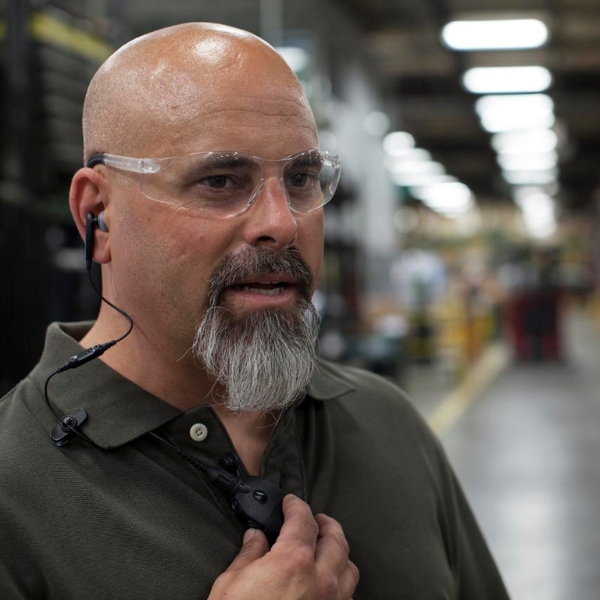
An earpiece delivers audio directly to the user via an in ear coiled acoustic tube, or over ear ( D-shell/ G-shape) keeping transmissions private. Most are paired with a PTT button clipped to the lapel or collar. Common in security, retail, hospitality and events.
Remote Speaker Microphones (RSMs)
An RSM clips to the shoulder or chest, allowing the user to hear and transmit without lifting the radio. Common in construction, facilities management and security.
ATEX-Certified Audio Accessories
In environments classified as explosive atmospheres, standard accessories cannot be used. ATEX-certified earpieces, RSMs and headsets are available for these settings.
Headsets
Headsets combine a speaker and microphone in a single head-worn unit, available in single-ear and dual-ear options. Heavy-duty versions with built-in hearing protection are available for loud industrial environments.
Batteries
Most professional radios are available with more than one battery option.
Standard batteries are suitable for a typical working shift, while high-capacity batteries last longer and are better suited to extended shifts or environments where there is limited opportunity to recharge. High-capacity batteries are slightly larger and heavier, though the difference is minimal in practice.
Purchasing spare batteries is common practice for larger fleets, allowing staff to swap a depleted battery for a charged one rather than waiting for a charge cycle to complete. This keeps radios in use throughout the working day without interruption.
Chargers
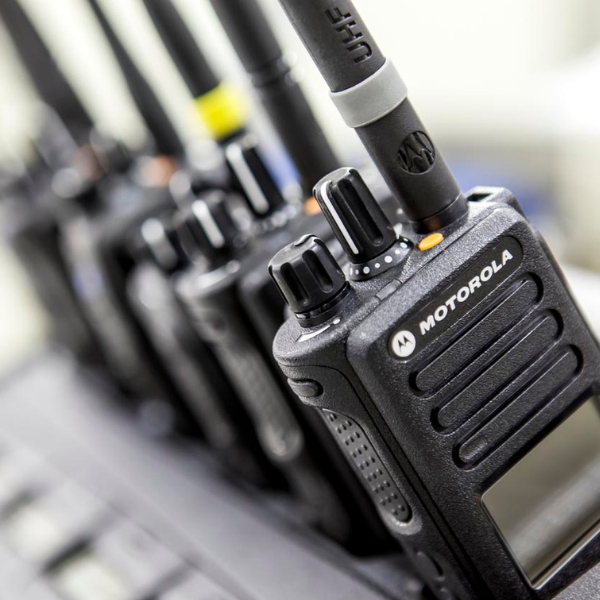
Radio chargers range from single-unit desktop chargers to multi-unit gang chargers that can charge six, twelve or more radios simultaneously.
Charger speed varies between models. A standard charger may take 10 to 14 hours for a full charge cycle, while a rapid charger can typically complete the same cycle in 2 to 3 hours.
Chargers also help maintain battery health through a conditioning cycle. This removes the memory effect, balances cell voltage, and restores the battery to maximum capacity, extending its lifespan.
Where operational continuity is critical, rapid chargers are worth considering as part of the initial purchase.
Carrying Solutions
Belt Clips
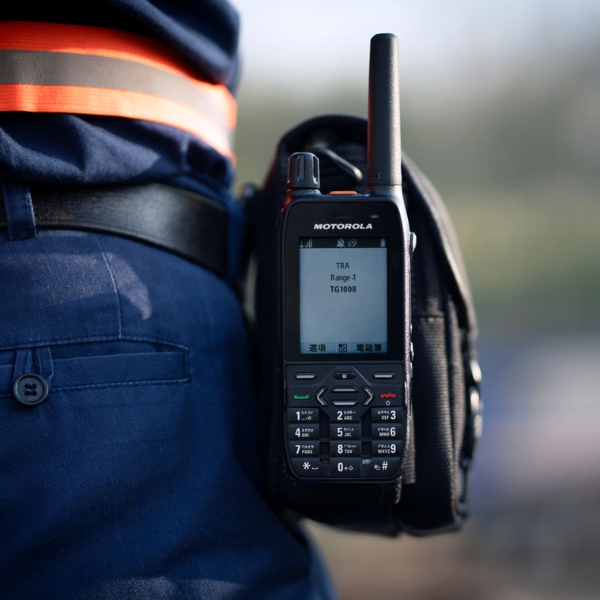
Most radios include a basic belt clip as standard. Replacement clips are available, including swivel versions that allow the radio to be repositioned without removing it from the belt.
Holsters and Cases
Holsters fully enclose the radio, protecting it from knocks and scratches. Hard cases suit physically demanding environments; soft nylon cases are lighter and better for retail or hospitality.
Chest Harnesses and Shoulder Mounts
For workers wearing hi-vis vests, overalls or harnesses, chest and shoulder mounts hold the radio at chest height and make transmissions easier to hear without an earpiece.
Frequently Asked Questions
Are radio accessories compatible across different brands?
Not always, as connector types vary between manufacturers and sometimes between models, so compatibility should always be checked before purchasing.
Do I need to buy the manufacturer’s own accessories?
Manufacturer accessories are designed and tested for the specific radio range and are generally recommended for professional use, as poorly fitting third-party connectors can damage the accessory port.
What is a remote speaker microphone (RSM) used for?
An RSM is a combined speaker and microphone unit worn on the shoulder or chest, allowing the user to transmit and receive without handling the radio directly.
How many radios can a gang charger charge at once?
Multi-unit gang chargers are available in a range of capacities, typically charging 6 or 12 radios simultaneously.
Can I use any earpiece with my radio?
Earpieces must match the connector type of the specific radio model, so compatibility should always be confirmed before purchase.
What is an ATEX-certified accessory?
An ATEX-certified accessory has been tested and approved for use in environments where flammable gases, vapours or dusts may be present, where standard accessories cannot be used.
Are accessories available to hire as well as buy?
Yes, audio accessories, batteries and chargers are typically available to hire alongside radio fleets for events and short-term deployments.
Whether you are purchasing accessories for an existing fleet, equipping a new radio system, or hiring radios for an event, 2CL can advise on the right equipment for your environment and team size.