
Regular two-way radios are not designed for hazardous environments. All radios generate a small amount of electrical energy, which is harmless in most workplaces but can present a risk where flammable gases, vapours or combustible dust are present.
ATEX-certified radios are specifically designed to operate safely in these conditions. In many UK industries, their use is a requirement rather than a preference.
This article explains what ATEX radios are, where they are used, what makes them different from standard two-way radios, and answers some common questions.
What Is an ATEX Radio?
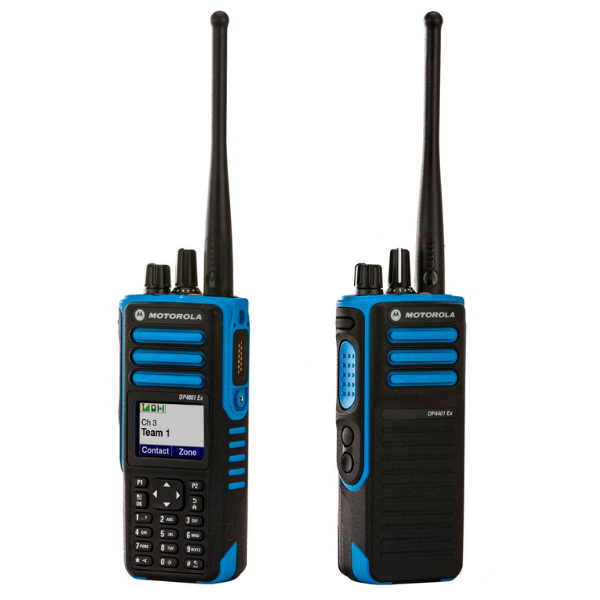
An ATEX-certified two-way radio is an intrinsically safe device.
This means it has been engineered and independently tested to ensure it cannot release sufficient electrical or thermal energy to ignite a surrounding explosive atmosphere – even in the event of damage or malfunction.
ATEX is a verified certification. You can check whether your radio is ATEX approved indicated by the Ex-symbol marked on the device.
Every element of an ATEX radio, from the battery to the casing materials and antenna design, are manufactured and tested to meet the ATEX standard.
Where Are ATEX Radios Required?
ATEX-certified radios are a regulatory requirement wherever workers operate in an environment classified as a potentially explosive atmosphere. Below is a comprehensive list of the environments which require ATEX-compliant two-way radios:
- Oil, Gas and Petrochemical Refineries, offshore platforms, fuel terminals and chemical plants.
- Energy and Utilities Power generation, hydrogen production and pipeline infrastructure.
- Pharmaceutical and Chemical Manufacturing Solvent-heavy production environments with explosive vapour risk.
- Food, Agriculture and Waste Processing Grain handling, flour mills and recycling facilities, combustible dust is more common than most realise.
- Mining and Quarrying Anywhere methane gas or combustible particulates are present.
- Marine, Ports and Fuel Terminals Confined spaces, flammable cargo and vessel handling operations.
If your site falls within any of these categories, ATEX-certified communication equipment isn’t an optional upgrade, it’s a legal requirement under the Dangerous Substances and Explosive Atmospheres Regulations 2002 (DSEAR).
What Sets ATEX Radios Apart from a Standard Two-Way Radio?
ATEX radios typically include features that are extra on a standard two-way radio.
| Feature | Why It Matters in a Hazardous Environment |
|---|---|
| Intrinsically Safe | Engineered to prevent ignition under all conditions. |
| Man-Down and Lone Worker Alerts | Detects if a worker is motionless or in distress and automatically triggers an alert. |
| Emergency Button | One-touch emergency broadcast to a supervisor or control room. |
| Integrated GPS Tracking | Allows real-time location monitoring of workers to improve both operational coordination and incident response. |
| Noise-Cancelling Audio | Designed for high-ambient-noise environments. Loud, clear audio and intelligent volume adjustment ensure messages are heard. |
| ATEX-rated Accessories | Headsets, speaker-microphones, and hands-free solutions are also ATEX-certified. |
| Lower Operating Power | ATEX radios are engineered to operate at reduced output power. |
FAQ’s
What does ATEX stand for?
Atmosphères Explosibles
What does intrinsically safe mean?
“Intrinsically safe” is used to describe equipment that’s specifically designed to be safe in environments where there’s a risk of fire or explosion.
Do ATEX radios come in any colour other than blue?
Yes, ATEX-certified police radios can come in red, although blue is the universal industry standard colour used to denote intrinsically safe equipment.
Why do I need ATEX radios?
You will need ATEX radios if your environment is hazardous or has a risk of being potentially explosive (see list above). They are compulsory to ensure you meet the Dangerous Substances and Explosive Atmospheres Regulations 2002 regulations.
Can ATEX radios be connected to breathing apparatus equipment?
Yes, ATEX two-way radios can be used with Breathing Apparatus (BA), including those used by Fire and Rescue Services. They are often integrated with BA systems via compatible bone-conductive headsets or mask communication units, allowing hands-free operation.
What accessories are compatible with ATEX two-way radios?
Carry cases, remote speaker microphones, headsets (also coloured blue), chargers and with the two-way ATEX radios we provide, they come with a belt clip and dust cover.
Can you integrate ATEX Radios into a control room software?
Yes, two-way ATEX radios can be integrated into Control room software such as TRBOnet, which enables features such as GPS tracking and voice recording.
Do you need ATEX two-way radios? Have some more questions? Contact us to speak with our expert team.