
If you are evaluating a radio fleet, buying for the first time, replacing ageing equipment or reviewing what you hire, the analogue vs digital question comes up early.
This guide sets out the pros and cons of each technology to help you identify which is the best fit for your organisation.
What Is the Difference Between Analogue and Digital Two-Way Radios?
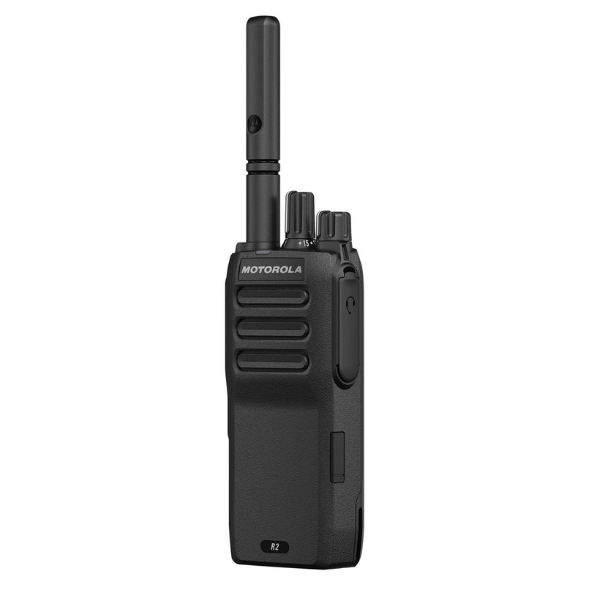
Think of it this way: analogue radios work like a traditional radio broadcast – your voice goes out over the airwaves as a continuous signal. It is simple, reliable, and has been the standard for professional radio communication for decades.
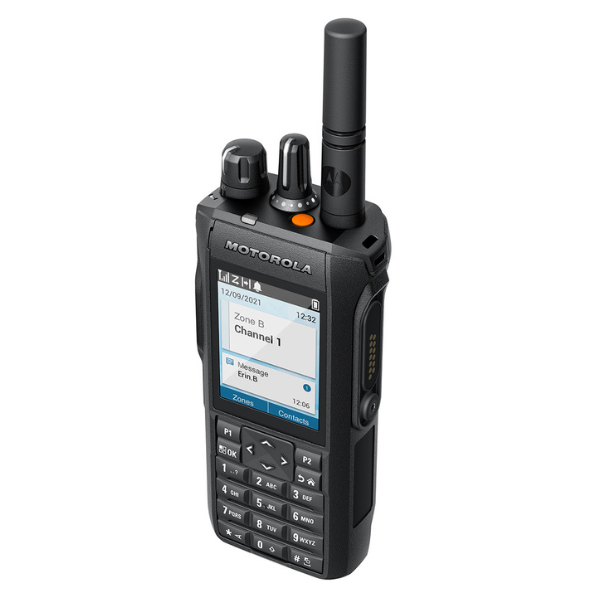
Digital radios do the same job, but more efficiently. They process and clean up your voice before it is transmitted, which means better audio quality, less background noise, and more users sharing the same airspace without interference. They also unlock features that analogue simply cannot support such as GPS tracking, text messaging, emergency alerts, and more.
But which is best for you? Let’s consider the pros and cons of each.
Analogue Two-Way Radios: Pros and Cons
Pros
- Lower upfront cost – Analogue radios generally cost less to purchase than equivalent digital models, making them practical for organisations with tight budgets or short-term needs.
- Simple to use and set up – Minimal programming is required, and staff can typically use an analogue radio with little or no training.
- Wide compatibility – Analogue radios are interoperable across brands and older infrastructure, an advantage where legacy equipment is already in place.
- Reliable for straightforward use cases – For small teams in a contained area, analogue does the job.
- Widely available for short-term hire – Analogue hire fleets are common and well-suited to one-off events or short projects.
Cons
- • Audio degrades with distance – Signal quality drops and background noise increases as users move further from the transmitter.
- Every noise is transmitted – Analogue radios pick up and transmit all ambient sound, affecting intelligibility in noisy environments.
- One conversation per channel – A standard analogue channel carries only one conversation at a time, creating bottlenecks in larger teams.
- No advanced features – Analogue does not support GPS, text messaging, emergency alerts or private calling.
- Security limitations – Analogue transmissions can be intercepted using basic scanning equipment.
Digital Two-Way Radios: Pros and Cons
Pros
- Consistent audio quality – Digital radios maintain clear audio to the edge of coverage, with background noise filtered before transmission.
- Greater capacity per frequency – A single digital frequency supports two simultaneous conversations, doubling capacity without additional licensing costs.
- Longer battery life – Digital radios are more energy-efficient, with up to 40% longer battery life than analogue equivalents on a comparable charge.
- Advanced safety and operational features – GPS tracking, lone worker alerts, man-down detection, text messaging, group calling and emergency alarms are standard across most digital platforms.
- Better security – Encryption is built in to most digital platforms, making interception significantly harder.
- Scalability and integration – Digital systems support far more users and integrate with dispatch software, CCTV and access control.
- Migration flexibility – Dual-mode radios run on existing analogue infrastructure while you phase in digital channels at your own pace.
Cons
- Higher upfront cost – Digital radios carry a higher purchase price than entry-level analogue equivalents, though the gap has narrowed.
- Requires initial programming – Digital radios need to be set up before use. It is straightforward for a supplier but not immediately plug-and-play.
- Short learning curve – The additional features mean a small training requirement, particularly for staff moving from analogue.
Analogue vs Digital: Key Differences
| Feature | Analogue | Digital |
|---|---|---|
| Audio quality | Voice degrades with distance | Consistent clarity across coverage area |
| Channel capacity | One conversation per channel at a time | Up to twice the users per frequency |
| Battery life | Standard | Up to 40% longer than analogue equivalent |
| Advanced features | None (voice only) | GPS tracking, text messaging, emergency alarms, call logs |
| Security / privacy | Easy to intercept with basic scanning equipment | Built-in encryption options |
| Cost: upfront | Lower purchase cost | Higher upfront cost |
| Cost: long-term | Higher infrastructure cost at scale | Up to 50% infrastructure saving vs analogue at scale |
| Setup complexity | Simple, minimal configuration | Requires programming; short learning curve for users |
| Migration path | Analogue-only | Dual-mode: can run analogue and digital simultaneously |
| Hire availability | Widely available; ideal for short-term use | Available for hire; better suited to ongoing deployments |
Which Technology Is Right for Your Organisation?
Analogue is likely the better fit if:
• You need a simple, low-cost solution for a small team in a single, contained area.
• You are running a short-term project or one-off event and need straightforward hire kit with no specialist setup.
• Your requirements are voice-only, and your existing analogue infrastructure still performs reliably.
Digital is likely the better fit if:
• You are planning long-term fleet use.
• You manage a team across a large or complex site where audio clarity, coverage and reliability are operationally important.
• You need features beyond voice: GPS, lone worker protection, emergency alerts or integration with a dispatch or control room system.
Frequently Asked Questions
Is analogue radio being phased out in the UK?
Ofcom continues to license analogue frequencies, and equipment remains widely available, though manufacturers are concentrating new features and product development in the digital space.
Are digital radios worth the extra cost?
For most professional deployments, yes, the improvement in audio clarity, battery life, capacity and features typically outweighs the price difference.
Do I need a separate Ofcom licence for digital radios?
A standard Ofcom business radio licence covers both analogue and digital (DMR) operation, though you should verify your licensed frequencies support digital use. 2CL can manage Ofcom licensing on your behalf.
How many users can a digital radio channel support compared to analogue?
A digital DMR channel using TDMA supports two simultaneous conversations on the same frequency, effectively doubling the user capacity of an analogue channel on the same licensed spectrum.
What is the range difference between analogue and digital radios?
Both cover similar distances, but digital radios maintain audio quality closer to the edge of that range through error correction, whereas analogue audio degrades steadily as the signal weakens.
Can I hire digital radios for an event?
Yes. 2CL supplies programmed, ready-to-use digital hire fleets for both short-term events and longer deployments, with full on-site support for large-scale events.
Not sure which technology is right for your site?
Our team can assess your environment, team size and existing infrastructure, and recommend the right solution. 2CL Communications has over 50 years of experience designing and supporting radio systems for facilities managers, events organisers, construction teams, retailers and more.
Get in touch to discuss your requirements or for general advice, we are happy to help.