
Hiring and purchasing two-way radios give you access to professional communication equipment, but they suit very different circumstances.
Here is a straightforward guide to help you choose.
Hiring Two-Way Radios
Hired radios arrive programmed, licensed, and ready to use.
- No capital outlay. Hire is an operating expense, removing the need for capital budget approval.
- Flexible scale. Hire exactly what you need for the duration you need it, without carrying equipment through quiet periods.
- Current equipment. Hire fleets are regularly refreshed, so you use up-to-date models without the risk of owning obsolete hardware.
- Support included. Programming, Ofcom licensing, technical support, and replacement units are typically bundled into the hire package.
- Good for trials. Hire is a practical way to test a system or model before committing to a purchase.

Limitations: cumulative hire costs eventually exceed outright purchase price; configuration options may be more limited than owned equipment; availability at peak periods is not always guaranteed.
Hire suits one-off events, seasonal operations, short-term projects, and any situation where requirements are temporary or uncertain.
Buying Two-Way Radios
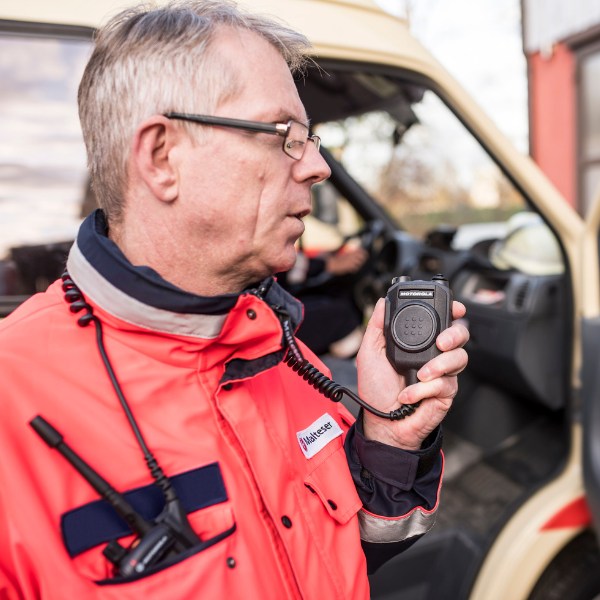
Owned radios become a business asset. Professional-grade handsets are built to last, and a well-maintained fleet will deliver reliable service for several years.
- Lower long-term cost. For teams using radios every working day, ownership is typically more cost-effective within two to three years.
- Full configuration control. Purchased radios can be programmed precisely for your site and applications, including lone worker, GPS tracking, and dispatch software integration.
- Supports complex systems. If radios form part of a wider infrastructure such as repeaters, dispatch software, body-worn cameras, access control, ownership provides a more practical foundation.
- Asset value. Owned equipment can be depreciated for accounting purposes and traded in on upgrade.
Limitations: higher upfront cost; the organisation takes on maintenance, battery management, and firmware updates; equipment may become redundant if requirements change significantly.
The purchase option suits organisations with a permanent, ongoing requirement: security teams, facilities management, construction programmes, education estates, and healthcare sites.
Long-Term Hire: A Middle Ground
Long-term hire, typically one to five years, sits between short-term event hire and outright purchase. The supplier provides and maintains the full fleet for a fixed monthly fee covering equipment, programming, Ofcom licences, and support.
It suits organisations where capital expenditure is restricted, where managed support is valuable, or where a phased migration to digital is still in progress.
Which Should You Choose?
- Requirement under three months: Hire
- Daily use, ongoing requirement: Purchase or Long-term Hire
- Capital budget restricted but opex available: Long-term Hire
- Part of a wider integrated system: Purchase or Long-term Hire
- Seasonal peaks or variable headcount: Hire additional units when needed
Frequently Asked Questions
Is it cheaper to hire or buy two-way radios?
For short-term or infrequent use, hiring is cheaper. For daily use, purchasing is typically more cost-effective within one to two years. Long-term hire sits between the two, trading asset ownership for cost predictability.
What does a radio hire package typically include?
Handsets, batteries, chargers, a licensed frequency, channel programming, and technical support. Most packages also include replacement units for any that develop a fault during the hire period.
Do hired radios come pre-programmed?
Yes. Radios are programmed before dispatch. You specify the channel requirements and any features needed. For larger deployments, a site survey and commissioning visit are standard.
Do I need an Ofcom licence to hire radios?
A licence is required for radios operating on licensed frequencies, whether hired or owned. Most hire suppliers manage the licence on your behalf as part of the package. Licence-free radios operate without a licence but have more limited range and performance.
What happens if a hired radio breaks?
Most hire contracts include a swap-out policy: a replacement is provided on-site or by next-day delivery. Check the terms before committing, particularly for events or deployments where a communication gap would be unacceptable.
Can I hire radios and use them alongside ones I already own?
Yes. Hired and owned units can operate on the same system provided they are programmed to the same frequency and channel configuration. Your supplier will need the details of your existing fleet to match them.
How far in advance should I book radio hire?
A couple of weeks is usually sufficient for smaller requirements. For large quantities, particularly during busy periods, four to eight weeks ahead is advisable.
Can I upgrade equipment during a long-term hire contract?
Many long-term agreements include provisions to upgrade mid-contract if a new model is released. This is one of the practical advantages of hire: you are not locked into a specific generation of hardware.
Talk to 2CL About Hire, Purchase, or Both
Whether you need radios for a single event, a long-term managed fleet, or advice on the right path for your organisation, 2CL Communications can help you find the most practical and cost-effective solution.